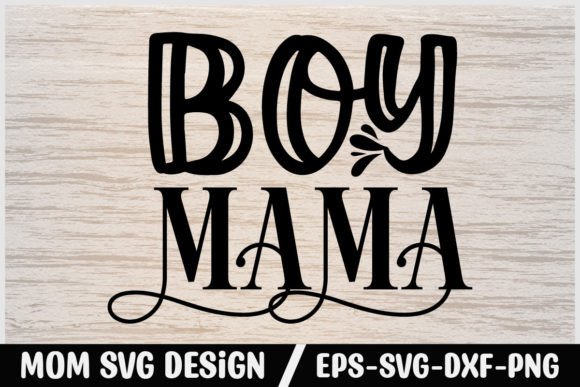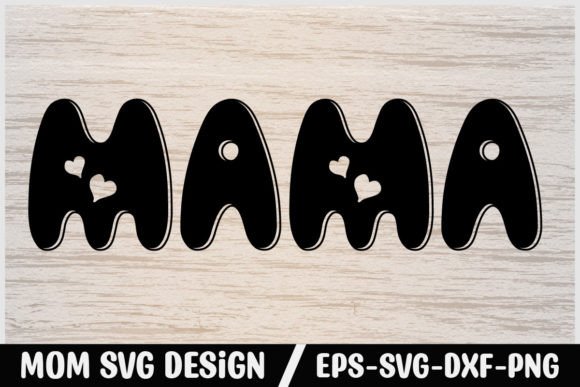
Mom Svg Design Mama Review
As a designer who spends half my life staring at stitch density charts and the other half trying to convince clients that "simple" is actually hard to execute well, I approach every new digital asset with a healthy dose of skepticism. We have all seen those flashy previews that look perfect on screen but turn into a muddy mess once they hit the hoop. That is why I decided to put Mom Svg Design Mama through its paces before adding it to my library of go-to assets for client work and personal craft business inventory.
This isn't just about whether the file opens correctly in your software—though that is step one—it is about how the design translates from a flat vector into a tactile, three-dimensional piece of art. I am evaluating this specifically for real-world application: custom apparel, personalized gifts, and small-batch merchandise where quality dictates customer retention.
The First Impression and Visual Personality
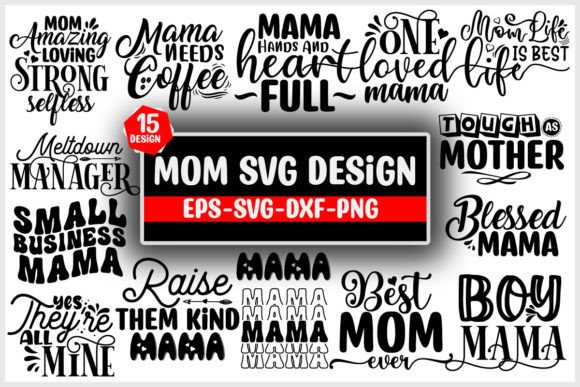
When you first load up the files included in the package, what strikes you immediately is the clean line work. The product description promises a zip file containing 1 SVG, 1 PNG, 1 EPS, and 1 DXF file, all noted as 100% vector and resizable. From a technical standpoint, this is exactly what you want. It means there are no jagged edges or low-resolution pixels waiting to ruin a large-scale print or embroidery job. The fact that it is easy to color allows for immense flexibility, letting you adapt the mood of the piece without having to redraw the core structure.
Visually, Mom Svg Design Mama carries a warm, inviting energy. It does not scream for attention with overly complex flourishes; instead, it relies on a strong central theme that resonates instantly. For an embroidery designer, this clarity is gold. Complex designs often get lost in the texture of the fabric, but this layout has enough breathing room to let the stitching technique shine. Whether you are aiming for a rustic farmhouse vibe or a modern minimalist aesthetic, the base design supports both directions depending on your thread choices and stabilizer selection.
Real-World Application: The Tote Bag Scenario
To truly test this design, I imagined a specific scenario: creating a boutique-quality tote bag for a local Mother’s Day pop-up shop. This is a high-volume item for many Etsy sellers and craft fair vendors, so the design needs to be versatile. It cannot look too childish if the mom is in her thirties, nor too formal if she is looking for something casual.
I loaded the SVG into my digitizing software and began mapping out the stitch types. Because the design is vector-based, scaling it to fit a standard 4x4 or 5x7 hoop was seamless. In this context, Mom Svg Design Mama performs exceptionally well as a centerpiece. If used on a canvas tote, the clean lines allow for a bold satin stitch outline that pops against the neutral fabric. Alternatively, using a fill stitch for the background elements can add a lovely texture that contrasts nicely with the smooth surface of the canvas.
The versatility extends beyond totes. I also visualized this on a soft fleece sweatshirt for a cozy family matching set. Here, the design works best when placed slightly off-center or over the heart, rather than dead center. The vector nature ensures that even if you scale it down for a child’s version of the same shirt, the proportions remain intact. This consistency is crucial for brands selling matching family sets, as it maintains visual harmony across different product sizes.
Where Caution Is Required
However, no design is universally perfect, and Mom Svg Design Mama has specific constraints that designers must respect. While the main shapes are robust, you need to be careful with any tiny decorative accents or thin lettering that might be part of the vector paths. On textured fabrics like chenille or heavy waffle-knit knits, these fine details can disappear entirely under the pile of the fabric. Similarly, on stretchy materials like jersey knit, dense stitch areas can cause puckering if you do not use a cut-away stabilizer properly.
Another area to watch is dark fabric. If the design relies on negative space or very light thread colors to define certain shapes, contrast will be your enemy. I recommend testing the design in black and white mockups before committing to expensive thread stocks. If the shapes do not read clearly in grayscale, they will likely struggle in full color on a navy or black garment. Furthermore, while the DXF file is great for cutting vinyl, keep in mind that embroidery requires different considerations than heat transfer. The design may need slight adjustments to account for thread pull, especially if you are combining applique techniques with direct embroidery.
Impact on Product Value and Customer Trust
In the world of handmade products and small business merchandise, perceived value is everything. A well-executed embroidery project signals professionalism and care. When a customer receives a personalized gift featuring Mom Svg Design Mama, they are not just buying a shirt or a towel; they are buying the assurance that the creator took time to ensure the design looked good. Clean lines and proper stitch density reduce the likelihood of loose threads or misaligned elements, which are common complaints in lower-quality mass-produced items.
This design also enhances brand consistency. For digital product sellers offering printable mockups or design assets, having a versatile vector source means you can showcase the product in multiple contexts—on a baby onesie, a kitchen apron, or a nursery pillow cover—without the design looking stretched or distorted. This flexibility helps buyers visualize the final product, leading to higher conversion rates and fewer returns due to mismatched expectations.
Practical Designer Notes for Execution
If you decide to incorporate this into your workflow, here are some practical steps to ensure success:
- Test on Scrap Fabric: Always run a sample on the exact fabric you plan to use. Different weaves absorb thread differently, affecting the final look.
- Check Thread Contrast: Ensure your chosen thread colors provide enough contrast against the fabric, especially for smaller details.
- Review Stitch Density: Adjust the density settings in your software to prevent bulkiness on delicate fabrics or gaps on tight weaves.
- Confirm Hoop Size: Verify that the scaled design fits comfortably within your machine’s hoop limits, leaving adequate margin for hooping stability.
- Inspect Small Details: Zoom in on the vector file to identify any potentially problematic thin lines that might not stitch out cleanly.
- Use Proper Stabilizer: Match your stabilizer type (cut-away vs. tear-away) to the fabric weight and stretch characteristics.
- Verify Licensing: Before selling finished items or distributing digital assets, double-check the license terms included with the purchase to ensure commercial use is permitted.
Ultimately, Mom Svg Design Mama is a solid addition to any designer’s toolkit. It offers the reliability of a high-quality vector file combined with a theme that has enduring appeal. By paying attention to fabric choice, stitch execution, and contrast, you can transform this simple graphic into a premium handmade product that customers will cherish. It is a reminder that while the digital file is important, the true magic happens when technology meets the needle and thread.